Urban Planning and Renovation on the French and Monaco Riviera
Why Previous Renovation Work May Not Mean It Was Fully Authorised
This guide explains why buyers should not assume that previous renovation work visible on a property was fully authorised. It is designed for international buyers who see existing extensions, terraces, openings, façade changes, or other visible improvements and instinctively take that as reassurance that the asset has already been regularised and can safely support similar future work. The point is not to issue a vague warning. It is to show why visible prior works can create false confidence, why buyers over-read existing conditions, and why legality, regularity, and future project assumptions should be tested independently rather than inferred from what is already there.
- Why visible prior works do not automatically prove full authorisation or regularity
- How buyers can over-read existing conditions and misprice future project freedom
Key takeaways
What this previous-works guide helps clarify
- Why visible prior works do not automatically prove full authorisation or regularity
- How buyers can over-read existing conditions and misprice future project freedom
- Why legality and project confidence should be tested independently
- How prior unauthorised or uncertain works can distort future renovation assumptions
- Why this question belongs inside acquisition discipline before completion
Why visible works create such powerful false reassurance
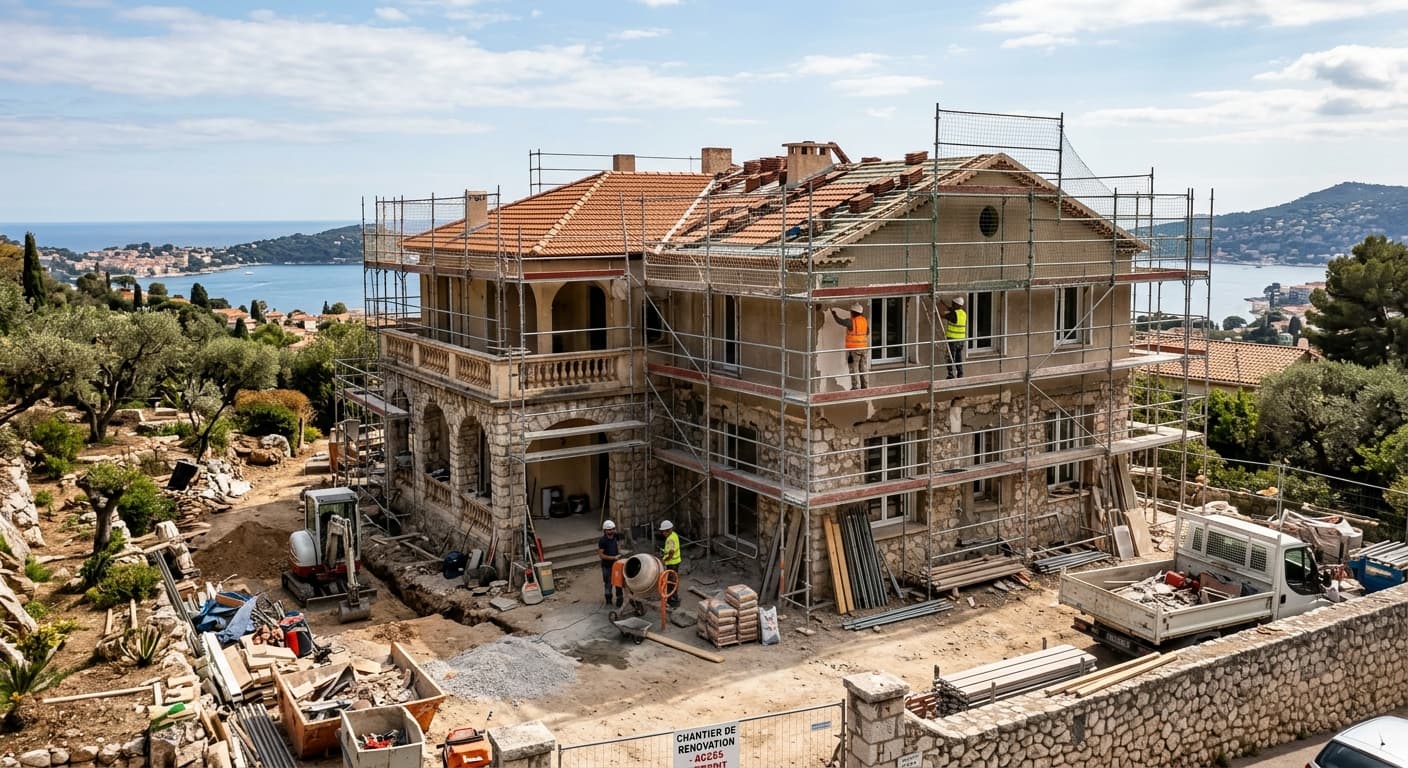
Buyers naturally assume that what they can see has already passed through the system safely enough to exist. A terrace is there, an opening has been enlarged, a roofline seems altered, a façade looks changed, or an extension appears already absorbed into the life of the property. It is easy to conclude that the file must therefore be clean enough and that future related works should be broadly manageable.
That assumption can be dangerous. Visible existence is not the same thing as legal certainty. A buyer who treats previous works as proof of full authorization may be borrowing confidence from the appearance of the property rather than from a properly grounded reading of its legal and planning history.
Why buyers over-read existing conditions
One of the most common acquisition shortcuts is to think in continuity: if this change already exists, then similar changes must be accepted; if the property has already been reworked once, then its future transformation should be relatively straightforward. But the legal and practical meaning of past works is rarely that simple.
This matters because buyers often use existing alterations to justify both price and future project ambition. They assume the asset is already part-way through a story of regularized transformation. If that story is weaker than it looks, the deal can be carrying more uncertainty than the visible condition suggests.
- Visible works do not automatically prove they were fully authorised
- Existing alteration does not guarantee future alteration will be easier
- Regularity and project freedom are separate questions
- The buyer should not inherit confidence from appearance alone
Why legality and future project logic need to be tested separately
A buyer should ask two different questions. First: is the current state of the property legally and practically regular enough to support confidence? Second: even if it is, does that tell me anything reliable about the future project I am imagining? These questions are related, but they are not interchangeable.
This distinction matters because buyers often collapse them into one reassuring story. But a property can contain prior works that are unclear, partially explained, or simply not useful as precedent for the future plan the buyer has in mind. Treating the existing state as proof of the future path can therefore be doubly risky.
Why uncertain prior works can distort future renovation assumptions
If previous works were not as straightforward as they appear, the buyer may be inheriting more than cosmetic uncertainty. The current state of the asset may already contain planning, regularity, or documentation questions that should influence how confidently the property is read. On top of that, the buyer may be imagining new works that rely on an overly generous interpretation of what the existing situation proves.
That is why prior works should be read as a separate diligence issue, not as a convenience that automatically strengthens the acquisition. In some cases, they may still be perfectly manageable. In others, they may show that the property's apparent maturity is less solid than the buyer first hoped.
Why this matters before purchase, not only after it
A buyer who intends further renovation or extension should not wait until after completion to discover whether the current state of the property is as regular and supportive as it looks. If the visible asset itself is being used as part of the reason the file feels safe, then the regularity of that visible asset already belongs inside pre-purchase analysis.
This is especially important for international buyers, who may rely more heavily on visual logic and informal reassurance during early visits. The safer approach is to separate what is attractive, what is documented, and what is actually useful as support for the future project before the purchase becomes too committed.
What international buyers often underestimate
Foreign buyers often underestimate how easily visible prior works can create a false sense of inherited compliance. They may think the real diligence starts with what they plan to do next, when in fact the first diligence question may be whether the property's current state means what they assume it means.
The safer mindset is to treat existing alterations as things to verify, not as silent guarantees. Once buyers do that, they usually become much better at judging whether the asset's current condition truly supports the future project they want to price into the deal.
Related reading
Related reading and next steps
These pages help connect prior visible works to broader planning risk, permit logic, and pre-completion renovation discipline.
Guide
Urban Planning and Renovation on the French and Monaco Riviera
A practical editorial guide to planning constraints, renovation feasibility, extension logic, and pre-purchase risk for international buyers on the Riviera.
Related Page
How to Read Planning Risk Before Purchase
A practical editorial guide to how buyers should identify planning risk before purchase, especially when future project freedom is part of the reason the property looks attractive.
Related Page
When Do You Need a Building Permit in France?
A practical editorial guide to when a buyer or owner typically needs a building permit in France, especially for Riviera residential projects where future works affect acquisition logic.
Related Page
How to Secure a Renovation Project Before Completion of Purchase
A practical editorial guide to how buyers can reduce renovation uncertainty before they complete a Riviera property purchase.
Area Guide
Nice
A strategic Nice area guide for international buyers evaluating residential property, buyer fit, practical realities, and local market logic on the French Riviera.
Area Guide
Villefranche-sur-Mer
A strategic Villefranche-sur-Mer area guide for international buyers evaluating residential property, buyer fit, practical realities, and ownership logic on the French Riviera.
Area Guide
Cap-d'Ail
A strategic Cap-d'Ail area guide for international buyers evaluating residential property, Monaco proximity, buyer fit, and practical French Riviera realities.
Next
Use this page to separate visible reality from legal certainty
A Riviera property may look improved, enlarged, or already transformed, but that visual impression should not do the legal reading for the buyer. The safer acquisition is the one that tests current regularity and future project logic as two separate questions before completion.
Use this next
Move into the section that answers the most immediate procedural or structuring question first.