Urban Planning and Renovation on the French and Monaco Riviera
When Do You Need a Building Permit in France?
This guide explains when a buyer or owner typically needs a building permit in France in practical project terms. It is designed for international buyers and owners who may be attracted to a Riviera property because of what they expect to build, enlarge, replace, or transform later. The point is not to recite permit law. It is to help readers understand which kinds of projects usually move into real permit territory, why that matters before they commit to an acquisition, and why permit assumptions can materially change the economics and timing of a high-value residential project.
- Which kinds of residential projects usually move into real permit territory
- Why extension, rebuilding, visible external change, and structural ambition matter before purchase
Key takeaways
What this building permit guide helps clarify
- Which kinds of residential projects usually move into real permit territory
- Why extension, rebuilding, visible external change, and structural ambition matter before purchase
- Why permit logic belongs inside acquisition analysis rather than after signing
- How buyers should treat permit-dependent value more cautiously
- Why a project becoming 'more ambitious' often means a different risk profile altogether
Why buyers should care about permit logic before they own the property
Many Riviera buyers begin with the property they see and quickly shift to the property they hope to create. Once that future project involves meaningful enlargement, replacement, visible structural change, or a materially more ambitious reconfiguration, permit logic becomes part of the acquisition itself rather than a later administrative detail.
That matters because buyers often negotiate and commit as if the desired future version were already reasonably secured. If the project later proves to require a heavier authorization path than expected, the whole valuation and timing logic of the deal can change. That is why building permit thinking belongs before commitment hardens, not only after purchase.
What kinds of projects usually move into real permit territory
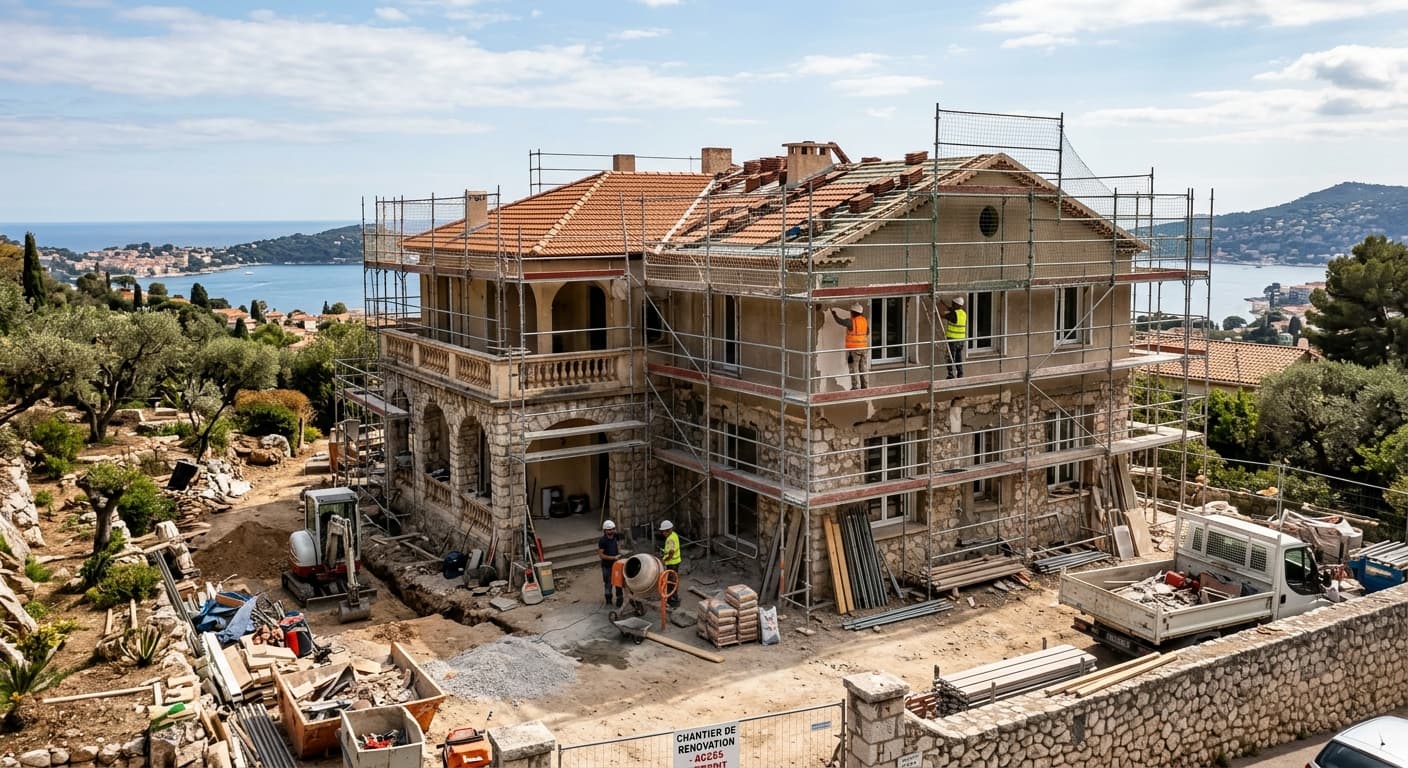
In practical buyer terms, the closer the project moves toward meaningful extension, reconstruction, strong external transformation, or structurally ambitious change, the more likely it is to enter true permit territory. The point is not that every visible intervention becomes automatically identical. It is that once the project stops being a modest adjustment and starts becoming a substantial reshaping of the asset, the authorization logic usually becomes more serious as well.
This is one reason buyers should resist broad early reassurances. A project may still sound residential and familiar, but if it depends on added volume, a new built relationship with the site, more visible massing, or the replacement of what already exists, it should be read as a permit-sensitive acquisition rather than as a simple cosmetic improvement with a predictable path.
- Meaningful extension or added volume
- Demolition and rebuild projects
- Major external transformation of the existing structure
- Projects with strong structural ambition rather than light alteration
- Visible site interventions that materially change the property's built profile
Why the shift into permit territory changes the deal
A project that requires a real building permit is not just a bigger renovation. It becomes a different category of future risk. Timing usually becomes more uncertain, local context matters more, file quality matters more, and the gap between what looks emotionally obvious and what is actually supportable can widen quickly.
That is why permit territory should change the way the buyer reads the asset. If the acquisition only works because of a permit-dependent future project, then the buyer is not simply buying a finished residential property with optional improvements. The buyer is buying into a development thesis that deserves stronger discipline before price and commitment are set.
Why visible and structural ambition matter so much on the Riviera
On the Riviera, many of the most desirable properties sit in environments where views, coastal proximity, topography, surrounding character, and visual impact all matter. That makes strong external change more sensitive than some buyers expect. A project can feel architecturally natural while still becoming much more delicate once it is judged through the local planning and site context.
International buyers often underestimate how quickly a project moves from 'updating a property' into 'materially changing what is on the site.' Once that threshold is crossed, the permit question is no longer a secondary technical point. It becomes one of the main variables shaping whether the acquisition still deserves the same level of confidence.
How buyers should think about permit risk before signing
The safer discipline is not to ask only whether a permit might eventually be obtainable. It is to ask whether the purchase still works if the permit path proves slower, narrower, or more demanding than first imagined. That shift in mindset matters because high-value residential projects are often sold emotionally through possibility before the real authorization path is understood.
A permit-dependent project can still be attractive. But the more a deal relies on extension, rebuild logic, or visible transformation, the less acceptable it is to treat the permit path as a routine afterthought. If the transaction only makes sense under a very generous authorization scenario, that is already a useful warning before the file becomes too committed.
What international buyers often misunderstand
Many foreign buyers assume that if a project is residential and privately financed, the authorization path should be relatively straightforward. On the Riviera, that can be too simple. A project may feel ordinary by international standards while still carrying meaningful permit sensitivity because of the exact site, the external appearance, the setting, or the level of structural ambition involved.
The better approach is to treat building permit logic as part of the wider project map. It should sit alongside site conditions, local urban-plan reading, access and construction logic, and the broader acquisition decision. That is what turns the permit question from abstract bureaucracy into useful pre-purchase discipline.
Related reading
Related reading and next steps
These pages help connect permit territory to lighter declarations, timing risk, and the broader planning logic behind renovation and redevelopment decisions.
Guide
Urban Planning and Renovation on the French and Monaco Riviera
A practical editorial guide to planning constraints, renovation feasibility, extension logic, and pre-purchase risk for international buyers on the Riviera.
Related Page
When Is a Simple Prior Declaration Enough?
A practical editorial guide to when a lighter prior declaration may be enough instead of a full building permit in France, especially for Riviera residential projects.
Related Page
How Long Does a Building Permit Take?
A practical editorial guide to how buyers and owners should think about building-permit timing in France, especially for Riviera projects where acquisition logic depends on future works.
Related Page
What Urban Planning Rules Matter Before Buying on the Riviera
A practical editorial guide to the planning and urban-rule questions buyers should test before buying on the Riviera, especially when future works, extension, or alteration matter.
Area Guide
Eze
A strategic Eze area guide for international buyers evaluating view-driven residential property, privacy, elevation tradeoffs, and practical Riviera realities.
Area Guide
Cap-d'Ail
A strategic Cap-d'Ail area guide for international buyers evaluating residential property, Monaco proximity, buyer fit, and practical French Riviera realities.
Area Guide
Villefranche-sur-Mer
A strategic Villefranche-sur-Mer area guide for international buyers evaluating residential property, buyer fit, practical realities, and ownership logic on the French Riviera.
Next
Use this page to judge when a project stops being 'simple works'
A project becomes safer when the buyer identifies early whether it belongs in true building-permit territory rather than assuming that future structural or visible changes will be treated as routine. The more value depends on that future project, the more important that distinction becomes before purchase.
Use this next
Move into the section that answers the most immediate procedural or structuring question first.