Urban Planning and Renovation on the French and Monaco Riviera
When Must an Architect Be Appointed?
This guide explains when an architect typically becomes necessary in a French renovation or building context in practical buyer terms. It is designed for international buyers who may see architectural involvement as something optional until late in the process. The aim is not to produce a specialist procedural memo. It is to show why some projects naturally require architectural involvement, why ambition and legal thresholds matter, and why serious Riviera projects should not treat design and technical coordination as an afterthought once the acquisition is already fixed.
- Why some projects naturally move into architect-led territory
- How ambition, legal thresholds, and project type affect the need for architectural involvement
Key takeaways
What this architect guide helps clarify
- Why some projects naturally move into architect-led territory
- How ambition, legal thresholds, and project type affect the need for architectural involvement
- Why design and technical coordination are central to serious Riviera works
- How late architectural thinking can distort timing and acquisition confidence
- Why buyers should read architectural necessity as part of project scale, not as optional styling
Why buyers often underestimate when architectural involvement becomes necessary
Many international buyers imagine the architect as a design luxury to be introduced once the property is already purchased and the ambition becomes more refined. That view can be dangerously incomplete on serious Riviera projects. The moment the project becomes more ambitious, more visible, more structurally demanding, or more dependent on planning and coordination, architectural involvement often stops being an aesthetic upgrade and starts becoming part of the project's basic operating logic.
That matters because the buyer may already be pricing, scheduling, and emotionally committing to a future transformation before the right design and technical discipline has been brought into the file. By the time the need becomes obvious, the acquisition may already be carrying assumptions that were too loose for the real project scale.
Why legal thresholds are only part of the answer
There are formal moments in French project life where architectural involvement becomes materially more important or expected. But buyers should be careful not to reduce the question to a single procedural threshold. In practical terms, a project can already need architectural leadership before the buyer feels pushed there by formality, simply because the level of design coordination, site reading, and planning exposure has become too serious for casual handling.
That is why the better question is not only 'At what point is an architect formally required?' It is also 'At what point does this project stop being manageable without strong architectural coordination?' On the Riviera, that point often arrives earlier than inexperienced buyers assume.
- The more ambitious the project, the more architecture becomes structural rather than decorative
- Formal thresholds matter, but project complexity often matters first
- Visible, planning-sensitive, or technically demanding projects need stronger coordination
- Serious design work usually belongs much earlier than buyers expect
Why Riviera projects naturally pull toward architectural leadership
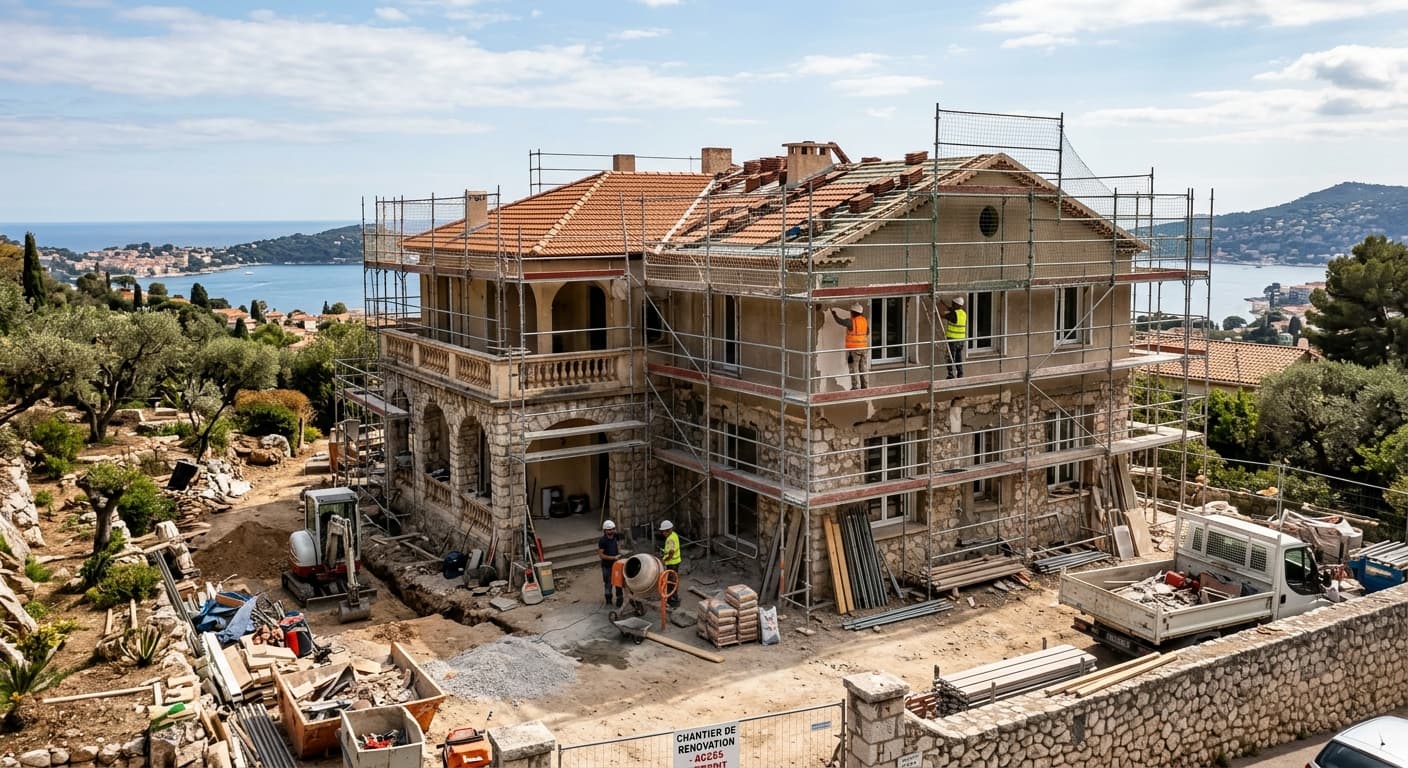
Riviera projects often sit in environments where views, terraces, slopes, façade presence, access, and local sensitivity all matter at once. That means the project is rarely only about interior taste. It is about how the intervention fits the site, how external change is handled, how planning constraints are read, and how the property can be transformed without collapsing under technical or administrative friction.
In that kind of setting, architectural work is not merely about producing attractive drawings. It is often the place where project ambition, site realism, legal exposure, and future usability are made coherent enough to support a serious acquisition or renovation decision.
Why buyers should not treat coordination as an afterthought
A common mistake is to think the project can be roughly imagined first and professionally structured later. But once the works become material, coordination itself becomes part of risk management. Without enough architectural discipline, the buyer may be relying on a future version of the property that is not yet coherent in planning, cost, timing, or technical terms.
This is one reason high-value projects can weaken before they begin. The buyer is emotionally committed to a result while the project framework is still underdeveloped. Bringing architectural leadership in too late does not just delay the project. It can reveal that the original acquisition logic was more speculative than it first looked.
Why this matters before purchase
If the property's value depends on a serious transformation, then architectural necessity is part of acquisition logic, not merely part of post-completion aesthetics. A project that needs strong design and technical leadership is already a different kind of purchase from a property that only needs contained, low-risk improvement.
That is why buyers should ask early whether the acquisition still works once proper architectural involvement, coordination burden, and project maturity are priced into the decision. If not, the file may be carrying too much optimism for the kind of project it is becoming.
What international buyers often misunderstand
Foreign buyers often equate architects with prestige or styling because that is how the role is often marketed to them. On serious Riviera projects, that is too narrow. The architect can become central because the project needs coherent translation between vision, site, legality, buildability, and formal process.
The safer mindset is to see architectural necessity as a signal about project scale. When a project starts needing that level of coordination, the buyer should also assume that timing, budget, planning, and acquisition discipline need to step up accordingly.
Related reading
Related reading and next steps
These pages help connect architectural necessity to project ambition, permit exposure, and wider renovation-risk discipline.
Guide
Urban Planning and Renovation on the French and Monaco Riviera
A practical editorial guide to planning constraints, renovation feasibility, extension logic, and pre-purchase risk for international buyers on the Riviera.
Related Page
Renovation vs Reconstruction: What Changes Legally
A practical editorial guide to how buyers should think about the legal and operational difference between a renovation project and a reconstruction project on the Riviera.
Related Page
When Do You Need a Building Permit in France?
A practical editorial guide to when a buyer or owner typically needs a building permit in France, especially for Riviera residential projects where future works affect acquisition logic.
Related Page
How to Budget Renovation Risk Before Buying
A practical editorial guide to how buyers should think about renovation risk before acquisition, including cost, scope, timing, planning, access, and project realism.
Area Guide
Eze
A strategic Eze area guide for international buyers evaluating view-driven residential property, privacy, elevation tradeoffs, and practical Riviera realities.
Area Guide
Villefranche-sur-Mer
A strategic Villefranche-sur-Mer area guide for international buyers evaluating residential property, buyer fit, practical realities, and ownership logic on the French Riviera.
Area Guide
Cap-d'Ail
A strategic Cap-d'Ail area guide for international buyers evaluating residential property, Monaco proximity, buyer fit, and practical French Riviera realities.
Next
Use this page to read architectural involvement as a project signal
When a Riviera project starts needing real architectural leadership, it is usually telling the buyer something important about its true scale, coordination burden, and acquisition risk. That signal should be taken seriously before the deal relies on a lighter vision of the works.
Use this next
Move into the section that answers the most immediate procedural or structuring question first.