Urban Planning and Renovation on the French and Monaco Riviera
What Buyers Should Check Before Buying Land or a House to Renovate
This guide explains what buyers should check before purchasing land or a house to renovate on the Riviera. It is designed for international buyers drawn to raw potential, whether that means a plot, a tired villa, or a property whose value seems to depend on transformation. The point is not to offer a generic checklist. It is to show why undeveloped or underused potential is often misread, why planning and site logic matter before commitment, and why a purchase only becomes intelligent once the buyer tests whether the intended project is genuinely supportable.
- Why raw potential is often overvalued before the hard constraints are tested
- How planning rules, topography, access, and services shape project credibility
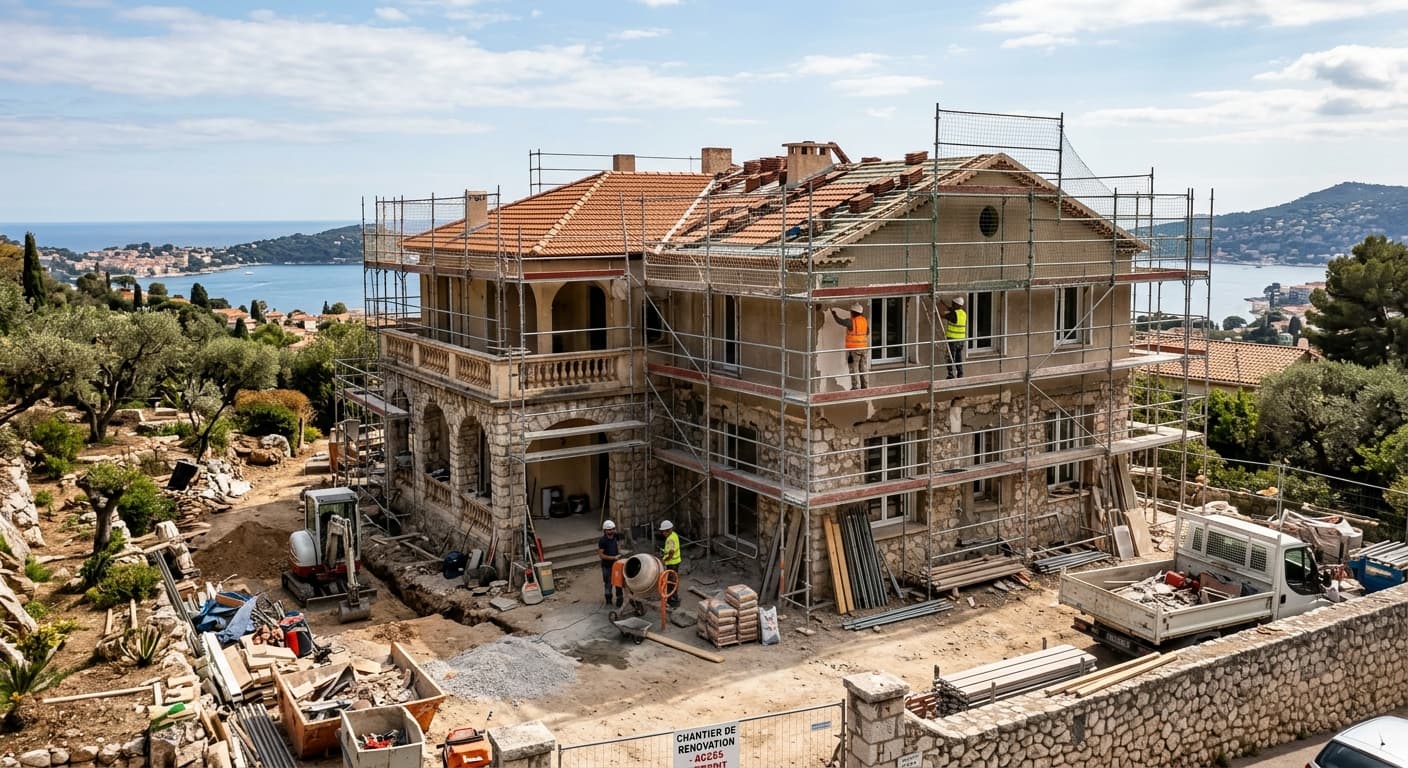
Key takeaways
What this land or renovation-project guide helps clarify
- Why raw potential is often overvalued before the hard constraints are tested
- How planning rules, topography, access, and services shape project credibility
- Why rights, legal conditions, and site logic matter before the buyer prices future upside
- How project ambition can drift far beyond what the site really supports
- Why buying land or a renovation project requires a different level of pre-purchase discipline
Why land and renovation projects are easy to misprice
A plot or a house to renovate can look highly attractive because the buyer is not comparing only current condition, but future possibility. That creates space for optimism, but it also creates space for mispricing. The less finished the asset, the easier it becomes for imagination to fill in what the site or structure may eventually become.
That is why these acquisitions need a different kind of discipline. The buyer is often paying for potential that still depends on planning logic, access, site practicality, rights, and execution complexity. If those supports weaken, the deal can become much less intelligent than it first appeared.
Why land should not be treated as a blank sheet
Buyers sometimes think a plot is simpler because there is less existing structure to work around. In reality, land is often more exposed to planning and site logic because the whole project depends on what can actually be built and how the site can support it. Access, slope, retaining needs, neighboring context, services, and visible impact all matter, and they can quickly change the feasibility or quality of the intended project.
That is why a Riviera plot should not be treated as an abstract quantity of square meters. It is a physical and legal environment with its own constraints. Until those are better understood, the buyer is not really buying future certainty. The buyer is buying a hypothesis.
Why a house to renovate can carry similar risk
An existing house can feel safer because something is already there. But if the acquisition only makes sense because of major transformation, many of the same issues reappear. The buyer still needs to know whether the intended project fits the planning environment, the building form, the site conditions, and the wider local logic.
A renovation project is therefore not automatically a simpler alternative to new construction or a rebuild thesis. It may still depend on extension, external change, restructuring, or visible interventions that carry real planning and technical sensitivity. The safer question is not whether the house is improvable in taste terms, but whether the specific future version being valued is grounded enough to justify the purchase.
- Planning compatibility of the intended future project
- Access and practical construction logic
- Services and utility connection reality
- Topography, retaining, and site complexity
- Existing rights, legal conditions, and physical limitations
- Whether the project remains attractive under a narrower scenario
Why access, services, and topography matter more than buyers expect
International buyers often focus first on view, orientation, prestige, and surface. Those matter, but land and renovation projects can succeed or fail on less glamorous issues. Access for works, technical servicing, slope management, retaining demands, and the general practicality of building or rebuilding on the site can materially alter both cost and credibility.
This is especially true on the Riviera, where dramatic sites often create both desirability and complexity. A plot or renovation project that looks exciting from a lifestyle perspective may become much less attractive once real construction and site constraints are read with enough discipline.
Why legal rights and project ambition need to be matched
Another common mistake is to let project ambition run ahead of what the site and legal context really support. Buyers may mentally design the final villa, family base, or investment product long before they have tested whether the rights attached to the site are strong enough for that vision. The larger the gap between ambition and evidence, the more speculative the acquisition becomes.
That does not mean buyers must eliminate every uncertainty before purchase. It means the ambition of the project should be matched against the actual level of clarity available. If the intended outcome is bold, the buyer needs more than broad reassurance before letting that future upside influence price or commitment.
How to judge whether the purchase is genuinely intelligent
A land or renovation acquisition becomes more intelligent when the buyer can distinguish between grounded potential and flattering projection. The right discipline is to ask what still makes sense if the project becomes smaller, slower, more expensive, or more constrained than first imagined.
If the transaction still works under that narrower scenario, the buyer may be dealing with manageable uncertainty. If it only works under a highly favorable reading of planning, access, services, and future rights, then the deal is carrying much more project risk than its early excitement may suggest.
Related reading
Related reading and next steps
These pages help connect land and renovation-project review to local planning logic, rebuild assumptions, and wider French Riviera diligence.
Guide
Urban Planning and Renovation on the French and Monaco Riviera
A practical editorial guide to planning constraints, renovation feasibility, extension logic, and pre-purchase risk for international buyers on the Riviera.
Related Page
What Is the Local Urban Plan and Why It Matters
A practical editorial guide to what the local urban plan means in buyer terms and why it matters before acquisition on the Riviera.
Related Page
Can You Demolish and Rebuild a Riviera Property?
A practical editorial guide to how buyers should think about demolition and rebuilding potential before buying on the Riviera, especially when redevelopment value is part of the acquisition logic.
Related Page
How to Read Planning Risk Before Purchase
A practical editorial guide to how buyers should identify planning risk before purchase, especially when future project freedom is part of the reason the property looks attractive.
Area Guide
Eze
A strategic Eze area guide for international buyers evaluating view-driven residential property, privacy, elevation tradeoffs, and practical Riviera realities.
Area Guide
Saint-Jean-Cap-Ferrat
A strategic Saint-Jean-Cap-Ferrat area guide for international buyers evaluating ultra-prime residential property, buyer fit, practical realities, and long-term ownership logic on the French Riviera.
Area Guide
Roquebrune-Cap-Martin
A strategic Roquebrune-Cap-Martin area guide for international buyers evaluating residential property, buyer fit, micro-location logic, and Monaco-to-Menton positioning.
Next
Use this page to test whether raw potential is really worth paying for
A plot or renovation project becomes safer when the buyer treats raw potential as something to verify rather than something to inherit automatically. The more the future project matters, the more important it is to test the narrower scenario before the purchase hardens.
Use this next
Move into the section that answers the most immediate procedural or structuring question first.