Urban Planning and Renovation on the French and Monaco Riviera
Planning and Renovation Constraints in Beaulieu-sur-Mer
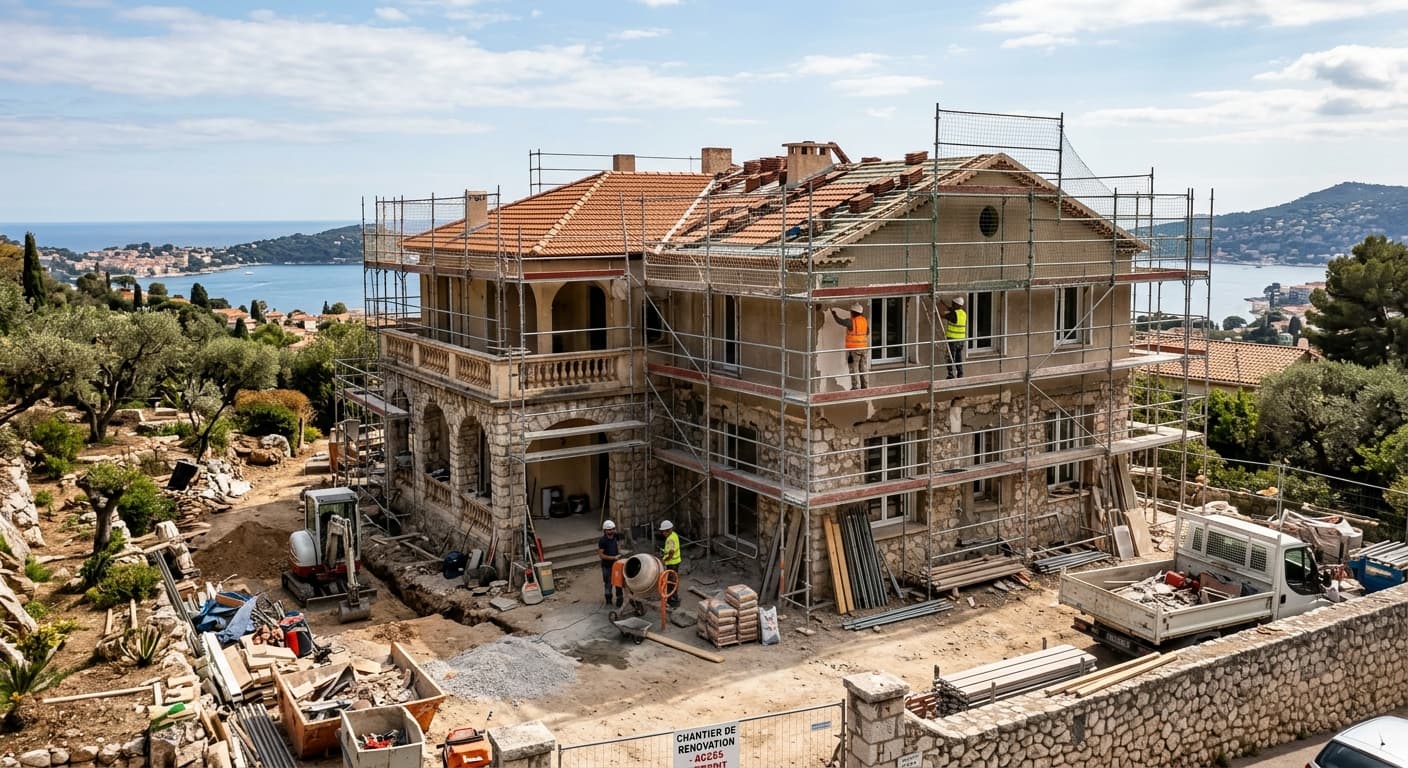
This guide explains how planning and renovation constraints should be understood in Beaulieu-sur-Mer. It is designed for international buyers who may see Beaulieu as a more orderly, elegant, and manageable Riviera environment and therefore assume that future works should be correspondingly straightforward. The point is not to turn Beaulieu into a difficult market by rhetoric. It is to show why an apparently easier location can still carry real building, co-ownership, visibility, and renovation limits once buyers start pricing in future change rather than simply judging present comfort.
- Why Beaulieu can feel easier than other Riviera locations while still carrying meaningful renovation limits
- How co-ownership, building stock, and practical building logic shape project risk here
Key takeaways
What this Beaulieu-sur-Mer planning guide helps clarify
- Why Beaulieu can feel easier than other Riviera locations while still carrying meaningful renovation limits
- How co-ownership, building stock, and practical building logic shape project risk here
- Why visible change and terrace or façade ambitions still require discipline
- How buyers can overprice future upside in a market that feels orderly and manageable
- Why the right project test in Beaulieu is often quieter but still decisive
Why Beaulieu-sur-Mer can look easier than it really is
Beaulieu-sur-Mer often gives buyers a reassuring first impression. Compared with more dramatic or more fragile Riviera locations, it can feel polished, legible, and relatively manageable. That can create a subtle bias: if the town itself feels orderly, then the property and its future project may also feel safer than they really are.
This matters because some of the hardest mistakes in Beaulieu are quiet mistakes rather than obvious ones. Buyers do not necessarily over-assume because the site looks wild or extreme. They over-assume because the market feels civilized enough that future change appears naturally workable.
Why building and co-ownership logic matter so much here
A meaningful part of Beaulieu-sur-Mer's residential stock sits in buildings where co-ownership, common parts, façade questions, terraces, and shared-building realities matter. That means the buyer is often not only buying a pleasant unit in a refined location. The buyer is also entering a building environment that can support, narrow, or distort a renovation plan.
This is one reason Beaulieu should not be treated as frictionless. In apartment-led or co-owned stock, the difference between a clean interior renovation idea and a secure project can be much larger than buyers first think. The elegance of the location does not remove the building from the equation.
- Co-ownership can reshape what looks simple from inside the apartment
- Façade, terrace, and common-part issues often matter materially
- Building condition can affect the credibility of the renovation thesis
- The more the buyer is paying for future improvement, the more the building needs to be read properly
Why visible and practical improvements still need caution
Because Beaulieu often feels easier than steeper or more exposed Riviera markets, buyers may underestimate the sensitivity of apparently modest improvement plans. Terrace logic, external openings, visible upgrades, façade-related ambitions, and more technical routes can still become more constrained once the project moves beyond light interior refreshment.
This does not make Beaulieu hostile to works. It simply means the buyer should not confuse lower drama with automatic freedom. In a market where quality and refinement matter, even moderate visible change can still depend on building and local conditions that deserve more scrutiny than the buyer first expects.
Why Beaulieu can encourage overpricing of future upside
One of the subtler risks in Beaulieu-sur-Mer is that buyers may pay for a gentle, improved future version of the property before that version has been tested carefully enough. The logic feels harmless: the location is refined, the building looks respectable, the apartment seems improvable, so the upside must be broadly trustworthy. But that is exactly where hidden friction can start to matter.
If the future value depends on terrace enhancement, façade-sensitive change, stronger internal reconfiguration, or co-ownership tolerance, the buyer still needs enough realism before allowing that upside to support the price. Otherwise, the deal can be misread precisely because it looks calmer than more obviously difficult Riviera projects.
How buyers should judge project risk in Beaulieu-sur-Mer
The right discipline is usually quieter here than in more dramatic settings. Buyers should not ask only whether the project is theoretically attractive. They should ask whether the apartment, building, co-ownership, and visible-change sensitivity still support the future version they are mentally buying. If that future version weakens, does the acquisition still work on the same terms?
If the answer is yes, the market's relative orderliness may indeed support the deal. If not, then the buyer may be over-relying on Beaulieu's calm reputation instead of on the actual constraints attached to the property.
What international buyers often underestimate
International buyers often underestimate how much a refined, apparently lower-friction location can still demand precision at building level. They may think the main project risk lies in more topographically or visually extreme places, while a Beaulieu apartment or house should be broadly straightforward. That is often too optimistic.
The safer mindset is to treat Beaulieu as elegant but not effortless. The location can absolutely support strong residential acquisitions, but the future project still has to survive co-ownership, building, visibility, and practical-use reality before it deserves to shape the price in the buyer's mind.
Related reading
Related reading and next steps
These pages help connect Beaulieu's calmer market feel to co-ownership limits, renovation discipline, and the wider area context.
Guide
Urban Planning and Renovation on the French and Monaco Riviera
A practical editorial guide to planning constraints, renovation feasibility, extension logic, and pre-purchase risk for international buyers on the Riviera.
Related Page
How Co-Ownership Rules Can Block Renovation Plans
A practical editorial guide to how co-ownership rules can materially block or reshape renovation projects on the Riviera before and after purchase.
Related Page
How to Secure a Renovation Project Before Completion of Purchase
A practical editorial guide to how buyers can reduce renovation uncertainty before they complete a Riviera property purchase.
Related Page
How to Budget Renovation Risk Before Buying
A practical editorial guide to how buyers should think about renovation risk before acquisition, including cost, scope, timing, planning, access, and project realism.
Area Guide
Beaulieu-sur-Mer
A strategic Beaulieu-sur-Mer area guide for international buyers evaluating residential property, buyer fit, practical realities, and ownership logic on the French Riviera.
Area Guide
Villefranche-sur-Mer
A strategic Villefranche-sur-Mer area guide for international buyers evaluating residential property, buyer fit, practical realities, and ownership logic on the French Riviera.
Area Guide
Saint-Jean-Cap-Ferrat
A strategic Saint-Jean-Cap-Ferrat area guide for international buyers evaluating ultra-prime residential property, buyer fit, practical realities, and long-term ownership logic on the French Riviera.
Next
Use this page to read Beaulieu through building reality, not only through elegance
Beaulieu-sur-Mer can support unusually pleasant and manageable ownership, but that should not lead the buyer to over-assume renovation freedom. The project still has to survive building, co-ownership, and visible-change reality before it can safely influence the price.
Use this next
Move into the section that answers the most immediate procedural or structuring question first.