Urban Planning and Renovation on the French and Monaco Riviera
Can You Add a Pool, Elevator, Rooftop Terrace, or Major Structural Change?
This guide explains how buyers should think about ambitious add-ons or structural changes in practical project terms. It is designed for international buyers who see luxury upgrade potential in a property and assume that premium budget plus design ambition should be enough to deliver it. The aim is not to answer yes or no feature by feature. It is to show why pools, elevators, rooftop terraces, and major structural interventions often sit at the edge of planning, co-ownership, structural, visibility, and neighbor-sensitivity constraints, and why that makes them much more conditional than buyers often expect.
- Why luxury upgrade ambitions often sit at the edge of what the site or building can support
- How planning, structure, visibility, and neighbor sensitivity all interact
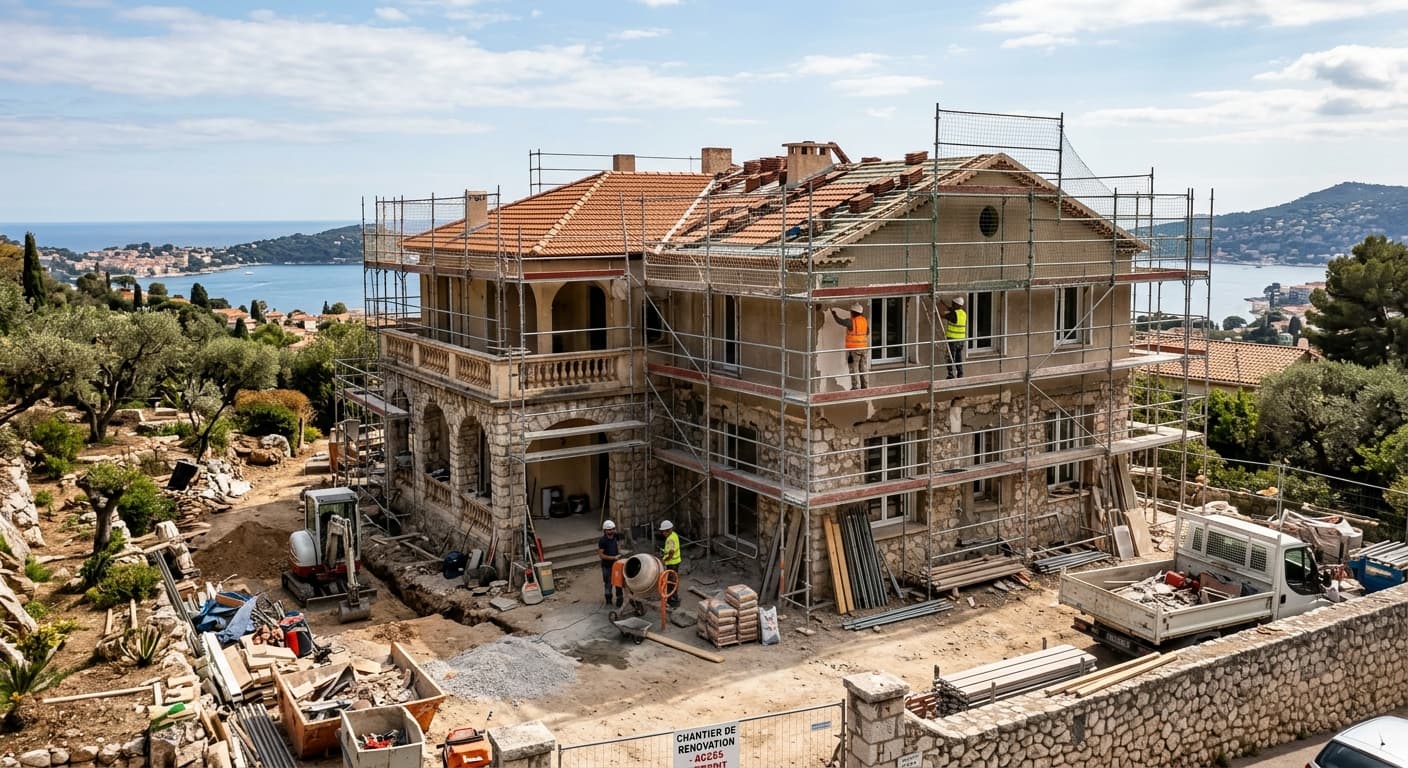
Key takeaways
What this ambitious-additions guide helps clarify
- Why luxury upgrade ambitions often sit at the edge of what the site or building can support
- How planning, structure, visibility, and neighbor sensitivity all interact
- Why co-ownership can matter as much as design ambition for apartments and shared buildings
- Why a feature that looks obvious in lifestyle terms can still be weak in project terms
- How buyers should test whether the deal still works without the upgrade they are imagining
Why these upgrades create such strong buyer optimism
A pool, private elevator, rooftop terrace, or major structural reworking can transform how a Riviera property is lived and valued. These features are powerful because they often feel like the missing link between a merely good property and an exceptional one. Buyers can therefore start treating them as latent value rather than as uncertain project ambitions.
That is where mistakes begin. The stronger the lifestyle upgrade, the easier it becomes to overread the property through what it could become rather than through what the site, building, and local framework may actually support.
Why ambitious add-ons are rarely just design questions
These upgrades often sit close to the edge of what a property can absorb because they involve more than taste. A pool changes the way land, servicing, and outdoor use work. An elevator affects structure, routes, and building logic. A rooftop terrace or major structural change may alter visibility, façade reading, shared-building relationships, and the way the asset presents itself within its setting.
That means the buyer should not think in terms of desired features first and constraints second. The better sequence is the opposite: understand what the project asks of the site, the building, the co-ownership if relevant, and the local planning environment before treating the feature as part of the value being purchased.
- Planning sensitivity around visible or structural change
- Shared-building and co-ownership constraints where relevant
- Structural and technical feasibility
- Visibility and neighbor exposure
- Whether the project still works if the upgrade becomes impossible or reduced
Why pools, rooftop terraces, and major external changes are especially sensitive
External and visible interventions often carry more risk than buyers expect on the Riviera, especially where views, slopes, façades, surrounding character, or coastal sensitivity matter. What looks like an ordinary luxury enhancement in lifestyle terms may still become a much more delicate proposition in project terms once site impact and visibility are read properly.
That is why buyers should be especially careful with rooftop and outdoor ambitions. These are often the features that look most obvious during a viewing because the emotional before-and-after is so easy to imagine. They are also often the features most exposed to planning, structural, or neighbor-related limits once the project is read seriously.
Why elevators and structural changes can become building-level problems
Ambitious internal upgrades are not necessarily safer. Elevators and major structural interventions often require the buyer to think well beyond the private interior. Routes, load paths, shared areas, plant, common parts, and technical implications can all make the project much more complex than the polished concept first suggests.
This is particularly true in apartments, duplexes, and high-value units inside shared buildings. The buyer may be imagining a private comfort upgrade while the building experiences it as a structural and governance issue. That disconnect is one reason these projects need stronger early discipline than buyers often assume.
Why 'luxury upgrade potential' should not be priced too early
Buyers often let one ambitious feature carry too much of the property's perceived upside. A house feels compelling because of the future pool. A penthouse feels exceptional because of the imagined rooftop terrace. A duplex feels transformable because of the future internal lift. If that feature later weakens, the whole investment story can weaken with it.
That is why the safer approach is to price the property first under a reduced scenario, one where the luxury upgrade is either smaller, slower, harder, or unavailable. If the deal still works, the upside may be a bonus. If it does not, the acquisition may already be depending too heavily on a feature that has not yet earned that level of confidence.
What international buyers often underestimate
International buyers often assume that a premium market naturally supports premium upgrades, especially if the works are well funded. On the Riviera, that can be too optimistic. The answer is shaped not only by money and taste, but by site logic, structure, planning exposure, neighbor sensitivity, and co-ownership or governance realities where relevant.
The safer mindset is to treat these features as high-value project hypotheses rather than as latent certainties. Once buyers do that, they usually make better decisions about whether the property itself is already strong enough to justify pursuit.
Related reading
Related reading and next steps
These pages help connect ambitious add-ons to co-ownership constraints, structural ambition, and pre-completion project discipline.
Guide
Urban Planning and Renovation on the French and Monaco Riviera
A practical editorial guide to planning constraints, renovation feasibility, extension logic, and pre-purchase risk for international buyers on the Riviera.
Related Page
How Co-Ownership Rules Can Block Renovation Plans
A practical editorial guide to how co-ownership rules can materially block or reshape renovation projects on the Riviera before and after purchase.
Related Page
How to Secure a Renovation Project Before Completion of Purchase
A practical editorial guide to how buyers can reduce renovation uncertainty before they complete a Riviera property purchase.
Related Page
Renovation vs Reconstruction: What Changes Legally
A practical editorial guide to how buyers should think about the legal and operational difference between a renovation project and a reconstruction project on the Riviera.
Area Guide
Eze
A strategic Eze area guide for international buyers evaluating view-driven residential property, privacy, elevation tradeoffs, and practical Riviera realities.
Area Guide
Saint-Jean-Cap-Ferrat
A strategic Saint-Jean-Cap-Ferrat area guide for international buyers evaluating ultra-prime residential property, buyer fit, practical realities, and long-term ownership logic on the French Riviera.
Area Guide
Beaulieu-sur-Mer
A strategic Beaulieu-sur-Mer area guide for international buyers evaluating residential property, buyer fit, practical realities, and ownership logic on the French Riviera.
Next
Use this page to test the feature before valuing the fantasy
A pool, rooftop terrace, elevator, or major structural change can create real upside, but only once it survives planning, structure, visibility, and governance reality. The safer acquisition is the one that still works if that feature remains uncertain.
Use this next
Move into the section that answers the most immediate procedural or structuring question first.